
Professional Workspaces Useful to Businesses
Remote working has a whole range of benefits. Post-pandemic numbers of people ‘working from home’ are still multiple times higher than pre-pandemic. But working from home has its down-sides. Coworking may be the real hybrid solution you’re after.
The era of remote working is far from over. With increasing cost pressures on businesses and workers, real estate costs could be a huge factor in how and where we work in the future.
Last month, Apollo Technical reviewed the work-from-home trend and concluded that it’s here to stay. It’s fair to say that some of the data they cited dates back to 2020 and 2021 which we have to recognise as peak work-from-home era thanks to old mate, global pandemic.
Headlines towards the end of last year captured the might of big global companies forcing workers to return to the office including Amazon, Microsoft, Disney, UPS, Boeing, Google, Meta and Zoom (yes, that video communications company, Zoom).
Look a little closer and those headlines generally referred to a two or three-day-a-week return, not a full-time return, making hybrid working (partly remote, partly on-site) increasingly common.
In NZ, Seek’s stats showed 8.9% of Kiwi job ads indicated that the role could be done from home. Pre-pandemic, very few of us worked from home. The industry breakdown of remote workers is as you’d expect - white collar desk-based workers by far leading the trend.
What is more interesting for regional towns like ours is that InternetNZ’s Internet Insights Survey at about the same time, suggested that half of Kiwis whose jobs allow work-from-home would consider moving somewhere if they could relocate their current job.
Turns out, New Zealand is the top destination for digital nomads in Australia. A digital nomad is someone who has the ability to work from anywhere. We are still the world’s best country for life-work balance according to Remote’s ranking of the world’s top 60 GDP countries. We have at least one digital nomad working from our place regularly, their employer being off-shore.
Hybrid working (being part-time office-based) may not easily work for people based in Ōamaru if the company is in Auckland but hey, if they’re in Dunedin or Timaru - at least a day a week here in town with us makes sense for both parties in terms of cost and travel time (that’s productivity, right there).
We’ve also hosted many people who are managing to move between towns and cities on at least a semi-regular basis. There’s no question that Waitaki offers a host of attractions that benefits remote workers who can be paid city-rates and enjoy the best of what our region has to offer.
Another group of our regulars live just far enough outside of town that they have to rely on expensive rural or satellite internet. That won’t last forever (the pricing will get increasingly competitive) but in the meantime, a membership at our place is a fraction of the cost, more reliable and likely, faster.
We’ve looked into it and there’s easily ten good reasons people here and everywhere choose to work out of places like ours - and that’s before you even factor in company’s ongoing operatoinal costs. Check them out.
Increased Productivity
Coworking environments often lead to higher productivity levels. The presence of others working alongside you can create a motivating atmosphere and reduce distractions.Enhanced Focus
The structured environment of a coworking space helps improve concentration. With dedicated areas for focused work and professional surroundings, it becomes easier to stay on task.Boosted Creativity
Collaboration and idea-sharing in coworking spaces can spark creativity. Diverse perspectives and spontaneous brainstorming sessions often lead to innovative solutions and new ideas.Networking Opportunities
Coworking spaces provide access to a broad network of professionals. This networking can lead to valuable connections, partnerships and business opportunities.Reduced Feelings of Isolation
Working alone can be isolating. Coworking spaces offer a sense of community and interaction, helping to combat loneliness and create a supportive work environment.Access to Resources and Amenities
Coworking spaces often come with professional amenities like high-speed internet, meeting rooms, and office equipment. These resources enhance your work experience without the overhead costs.Cost-Effective Solutions
Renting space in a coworking environment is typically more affordable than maintaining a private office - even one at home. It offers flexible plans and scalability, reducing operational costs.Work-Life Balance
Coworking spaces help maintain a clear boundary between work and personal life. The professional setting aids in creating a routine and a clear separation from home responsibilities.Opportunities for Learning and Development
Many coworking spaces offer workshops, events, and networking activities that can contribute to personal and professional growth. This fosters continuous learning and skill development.Increased Flexibility
Coworking spaces often provide flexible membership plans, allowing you to choose the level of access that suits your needs. This flexibility helps accommodate various work styles and schedules.
So if any of that sounds like a little bit of what you need, check out our website and talk to us. The way we work has changed. A professional environment is a real asset - it just doesn’t have to be in the same place as the company or even in the same place all the time. Can your business afford not to be flexible?

Microsoft Skills Training
If you or someone in your team needs some help to become more proficient with Microsoft tools, we may have the solution for you. Local training that saves you money? Check it out here.
Training staff definitely costs but possibly not as much as the productivity deficit when your team isn’t using their tools most efficiently. That’s why we’ve found a trainer who is willing to come to Oamaru to deliver first class Microsoft skills training.
All we have to do is put enough people in the room to make it worth their while. So, if you or someone in your team needs to upskill, let us know using the form below.
Once we get an idea of who needs what, we can start to put together a training plan that will save everyone a bit of coin.

"The Future of Work is Flexible"
In the war for talent, remote working might be a dealmaker. Check out the latest research on what Kiwi office workers think about working remotely some or all of the time.
This week, Employment Hero released their Remote Work Report. Obviously, we’re interested - we are all about remote work. Likely you will be interested too; whether you’re an employer or an employee because the “future of work is flexible”.
Here’s the headline - “less than half of New Zealand’s employees have fully returned to the office”. Wowser, worse than the number of kids not returning to school! Actually, it’s ‘knowledge workers’ specifically that haven’t returned to offices and that’s defined as “workers with jobs which require them to work primarily on a computer or with documentation, rather than a job which is predominantly physical or location-bound”.
Here’s the rub though… If you thought that let your business off the hook, the survey respondents came from a whole range of industries. Even restaurants, factories and shops can have office-based staff.
So, what’s the story?
Essentially, 40% of NZ knowledge workers “have embraced a hybrid working arrangement, and 21% work remotely all of the time”. Is it popular? All indications say yes, 81% of Kiwi knowledge workers “would consider working remotely permanently from now on”.
Given the skills shortage, the rising costs of living (and commuting), flexibility around where a person works from could be a dealmaker.
Employment Hero’s research showed 89% of respondents would work remotely at least one day a week. Here’s the clincher – 48% of people who were already working remotely at least some of the time, said they would consider quitting their job if their employers forced them back to the office full-time.
We’ve all seen the research around four-day weeks and increased productivity (if not, Google it, it’s massive). Remote working can also provide improvements in productivity and quality of work.
There is a question of age. The 18-24 year olds were 24% more likely than average to say they were happy to work remotely every day. Those aged 55+ were 80% more likely to say they wouldn’t choose to work remotely at all. It’s that elusive thing, work-life balance (at least that’s what my generation used to call it, younger generations call it ‘life’).
According to Employment Hero, 39% of the surveyed employees had returned to the office at the directive of their employer, but that’s not the only reason. Some people missed the office buzz; 25% of those returning said it was for the culture and 17% was because they were feeling isolated.
The reality check is that on an individual level, people have all sorts of reasons to want to work remotely. We see a real mix at The Business Hive. We see some people only in the school holidays because a) they’re visiting from out of town and leaving the kids with the grandies or b) they’re seeking refuge (from the kids at home) to get some work done.
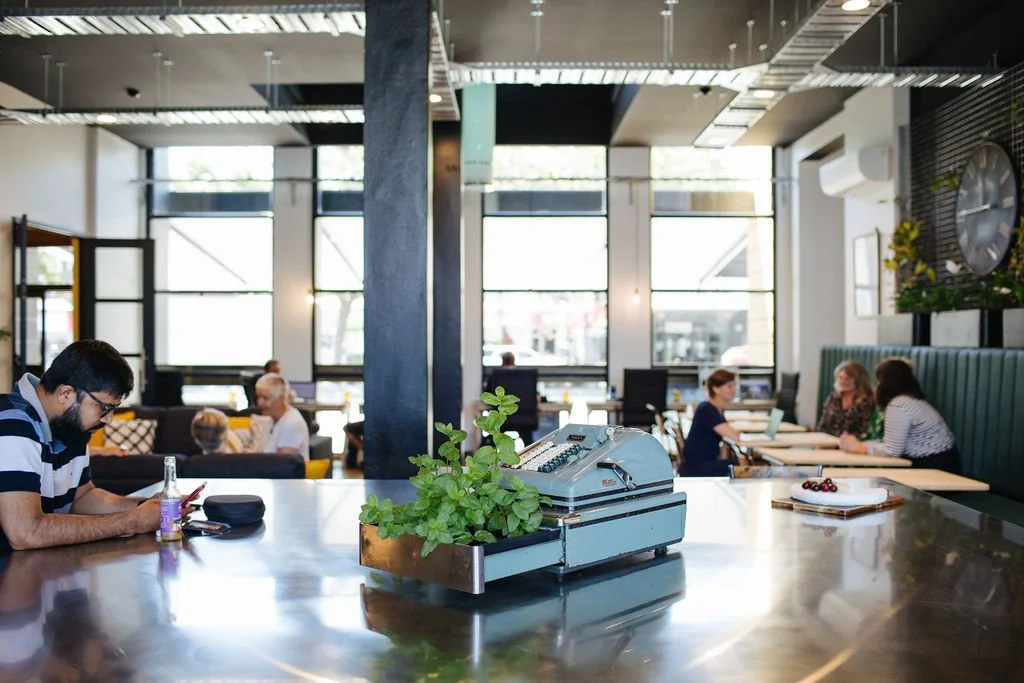
While some of our people find being in a professional environment helps them focus on work, others come for the sociability or a mix of the two. The great thing is we have spaces for both – focused work with an extra screen in a quieter zone or a more social environment with an eye to everyone’s favourite gathering spot (when you want to be social) – our enormous kitchen island!
The trick for employers is going to be figuring out what your employees want and how often. Businesses are only going to save on overheads if they have flexibility in their property arrangements. A floor of mostly empty desks costs about the same to run as a floor at full capacity.
Equally, employees who shoulder the cost of working remotely (power, IT, heating, printing etc…) can’t claim those costs back in the same way self-employed people can. No business wants to pay twice.
The Remote Work Report also considers how remote work impacts on marginalised people and their perceptions of equity (remote working seems to be better for them) and what impact automation and AI (artificial intelligence) might have (we aren’t ready to trust it entirely).
In all, it’s worth a read. The difference in attitudes by age could indicate stage of life but it could also be tipping a nod to the way of work in the future. With the skills shortage impacting everywhere – the fight for the best people might yet come down to changing our expectations on the way they should work.