

We can get through as a community
How we get through the next few weeks is the whole community’s business.
Ask yourself the question, ‘‘what can I do?’’

Our local economy needs you.
While Auckland (arguably) is at or near peak Omicron, we’re just getting under way.
Xero’s small business index for January 2022 fell below 97 points, after three months in a row above the 100s. Remembering that 100 on the index represents average performance, this signals an economic step change.
The downturn is largely due to slowing small business sales. Unsurprisingly hospitality and accommodation suffered the most (year-on-year growth rates slowing by 2.2% and 4.2% respectively) but even agriculture, forestry and fishing slowed (down 1.4%), and job growth was down 1.9%. This latest data doesn’t reveal the impact of January 23’s Red light as yet.
Overseas after their respective outbreaks of Omicron, Australia’s index fell to 86 and the UK’s to 85.
New Zealand’s economy has held better than most. As our Business South navigator, Rebecca Finlay, wrote last week, right now the biggest impediment to business and the local economy is lack of staff. We’re seeing that in Wellington this week as staff isolate and services struggle; supermarkets, primary healthcare, ferries, recycling, transport and restaurants.
Restaurant Association president Mike Egan said the Wellington community had rallied by getting healthy staff to plug staffing gaps in other restaurants. Surely that’s the kind of thing we can do here in the Waitaki.
At it’s most useful, rallying means knowing where we can help and understanding what resources are required. So Waitaki, getting connected has never been more important than now.
That means ask businesses how they are doing.
Ask businesses what you can best do to help.
Jump online to your groups town and country — ask questions, show your support.
If you can’t spend more money with them, can you review them to encourage others to spend there?
Do you know someone reliable who needs casual work? Can you connect them to a relevant business where usual staff are isolating?
Could you dust off some skills and offer to do a shift somewhere to help out? Could you volunteer somewhere to take the pressure off?
At The Business Hive, we’re in the business of connecting people — so call or come in.
We’re also home to Business South who are here to support all businesses, not just members, so talk to Rebecca Finlay (who’s doing a phenomenal job).
How we get through the next few weeks is the whole community’s business.
Ask yourself the question, ‘‘what can I do?’’

Negotiating the way in this Vuca world
It’s about supporting a thriving business community for the benefit of us all.
We’re in it together, Waitaki.
Welcome 2022. This is the year to get involved.

It’s 2022, and more than a year since we bought a little old building in Oamaru.
You know the one.
Thames St, next to Poshtel.
The outside looks a bit like a bee hive (now) — boxy, yellow with black stripes. Handy that, because we are The Business Hive — and our logo sits at the very top.
Design-wise, that’s the inspired visual concept by local design company Design Federation.
Execution-wise, you’re seeing the consummate skills of Ace Painters and MJ Ireland Signs.
Why am I telling you this? It’s because the very image of our building illustrates a cornerstone of our business values — that smart, collective efforts outclass simple intention (in this case, paint the building).
We’re heading into a year where expert business predictions are a truly mixed bag. The whole world is facing increased volatility, uncertainty, complexity and ambiguity (it’s termed a Vuca world).
We don’t have the immigrant labour force we’ve relied on.
We have ongoing supply chain disruptions.
We know that Millennials and Gen Z (adults under 38) are increasingly seeking purposeful work and flexibility (which could be underpinning the great resignation).
Here in the Waitaki, work is more concentrated in a few industries than in other parts of the country.
Our 2020 HHI (Herfindahl-Hirschman Index, where an index of zero represents economic activity evenly spread across all industries) was 144.2 compared with 47.5 nationally.
This matters because the more a region’s economic activity is limited by industry types, the more vulnerable it is to adverse effects (eg commodity price, scarcity or labour force issues).
This year will bring unprecedented opportunities to solve problems in both big and small businesses — and we do that best through smart, collective efforts.
That means understanding what the challenges are and making connections that will help us find the solutions.
The building that is The Business Hive is a striking visual reminder in the heart of our town — an example of businesses working together for something greater than the sum of its parts.
That’s our reason for being — to help businesses make those connections that will drive local economic growth.
It’s why we’ll be working with the Oamaru Business Collective and Business South, local businesses and those newly appearing with ambitious business ideas.
It’s about supporting a thriving business community for the benefit of us all.
We’re in it together, Waitaki.
Welcome 2022. This is the year to get involved.
Source: https://www.oamarumail.co.nz/opinion/negotiating-the-way-in-this-vuca-world/

Time to get on with it in new normal
Yellow is the new black and Covid is the new normal.
We’ve got masks, vaccinations and outdoors up our sleeves. I’d love to hear your ideas.

Well, last Monday’s announcement seems to have put the kibosh on a South Island with different-from-North-Island rules.
Air New Zealand announced that no jabs means no flying internationally, maybe not at all.
The Government announced no jabs means no entry to New Zealand for non-citizens starting November 1.
Vaccine passports are up for discussion.
Alert Level 3 has multiple settings.
It’s getting more “nuanced”, which means more to get our heads around – and we’ve been told more changes are coming.
Bottom line – restrictions here for a while.
Vaccinations are the new “elimination”.
Outside is safer than inside (because, transmission).
Masks are staying.
Yep, we kinda knew that too – it’s what’s been happening everywhere else.
So let’s get on with it.
In these parts, we’re problem solvers. Sure, there’s some bitching and whining (hey, even in the Waitaki we have a vocal few of that kind), but mostly we dust ourselves off and stump up with solutions.
Delta Level 2 means restrictions. Delta Level 1 likely will as well.
Masks.
Masks suck but people get used to them. Alex reminds me that he’s worn many masks, in many jobs, in all weathers, inside and outside. He’s a living example of well-adjusted mask-wearing from a pre-Covid world.
It snaps me back to the days of no seatbelts, habitual drink-driving and no helmets on skis – all things we learned about, got used to or got over.
We can do this.
Vaccinations.
Yep, I’ve got the jab twice.
I had cancer for a bit, made my treatment choices and am more than five years clear, but it still breaks my heart every time someone is diagnosed.
I know they could survive relatively unscathed, like me. I also know they might not. I know that fear. I don’t want it for anyone.
Covid could be far more common than cancer (which is one in every three) and more impactful.
Nuff said.
Outside.
Summer is coming. Where we live, it’s traditionally dry. Let’s use our natural advantages. Council’s waived the fees for street furniture. The weather is on our side. We have amazing outside spaces! Let’s get busy on it.
Yellow is the new black and Covid is the new normal.
We’ve got masks, vaccinations and outdoors up our sleeves. I’d love to hear your ideas.
Source: https://www.oamarumail.co.nz/opinion/time-to-get-on-with-it-in-new-normal/

Facing our fears, working together
If you need help, ask. If you can help, do. Bring your ideas to the table, get involved and let’s all do our part in what we know needs to be done.

Alex and I popped down to The Business Hive this week, masked and dangerous, armed with the now familiar Covid-yellow insulation tape and (coincidentally) Covid-yellow tape measure (1m rule).
This time feels same but different.
Cleaning, yep. Measuring, yep. Rearranging furniture, yep.
Wondering if we’re doing it right? This time, not so much.
Worried about contagion in our building? This time, not at all.
No business owner wants to get Covid or worse, be responsible for its spread.
We all know that testing, wastewater testing and contact tracing is key.
We’ve learned how transmission can happen and how best to prevent it.
We know we don’t have Covid in the South Island right now. That doesn’t mean we should flout the rules, but we can let go of some of those last-time-we-got-the-tape-out fears.
The fears that we can’t so easily bypass are equally familiar.
Fears about how to meet 100% of outgoings with a fraction of earnings, fears about the mounting costs of compliance, and the biggest fear of all – what if an employer can’t look after their staff?
Every employer I’ve spoken with in the past few weeks has been focused on their team.
Some are doing OK, but others are choosing to put wages ahead of bills, hoping the proverbial tape holds over these (hopefully) short-term financial cracks.
Business owners know their people, they know those families, responsibilities and lives. They share in their teams’ joys and care about their disappointments.
The mere thought of letting down any of their people – it’s what makes for sleepless nights.
That’s why we must support local businesses – they are the bedrock of our community.
It’s why everyone (council, commercial and community) must work together so no families fall through that Covid-shaped hole.
I’m pleased to say collaboration is exactly what I am seeing.
Diverse groups are sharing information and working hard to help.
From penguin posters of solidarity (thanks to local graphic artist Scott Wilson) to multi-agency discussions, problems are being considered and solutions tested.
This place has rich history of great ideas, mobilising voices and putting in the hard work. We can live up to that legacy with open minds and listening ears.
If you need help, ask. If you can help, do. Bring your ideas to the table, get involved and let’s all do our part in what we know needs to be done.
Source: https://www.oamarumail.co.nz/opinion/facing-our-fears-working-together/

Cautious sense of relief, optimism from businesses
A quick nosey through business reports and predictions tells me that New Zealand small businesses are doing pretty well in the global shape of things.

A quick nosey through business reports and predictions tells me that New Zealand small businesses are doing pretty well in the global shape of things.
Xero’s new Small Business Index showed the small business sector was performing better than average for the second month in a row across all four measures – sales, jobs, wages and the time it takes to be paid.
Looking more closely at the numbers, it’s good news, but we’re not there yet.
Small-business sales increased by 14.3% compared with last year, but we have to remember that we went into lockdown in the last week of March 2020.
Jobs numbers increased 3.7% year on the year, with the exception of hospitality which experienced a 7.8% decrease.
Small-business wages (average hourly earnings) were up 3.2% year on the year but the 2019 average monthly increase was 3.8%.
Time to be paid has decreased to 21.2 days which is good for small-business cashflow, but more than double the 10 days prompt payment goal that the Government self-imposed in June 2020 and widely recommended.
In chatting with local business owners, I’m hearing a sense of cautious relief and optimism. Many businesses have been doing at least as well as their owners had hoped and, in some cases, better than ever.
A key element locally is that those who are doing online sales are seeing uptake across the board. So, yes, we are shopping online as well as buying local, but some of our local small businesses are taking advantage of that trend by selling into other local, national and international markets.
At The Business Hive, we’re seeing a steady increase in the number of businesses getting in touch for contacts and connections – including newcomer businesses.
We’re seeing outstanding collaboration between traditionally competitive business, including in our own building project.
We’ve also noticed an increase in partnered-business promotions, where local businesses are working together to cross promote their products and/or services.
Right now, local businesses are also being asked for their input for the Waitaki District Council’s long-term, destination management and spatial plans. Make time to look ahead – your input now could help shore up many longer term benefits for our region.
Keep being engaged.
Follow the Oamaru Business Collective if you haven’t already.
Winter is coming and opportunities will keep coming too. Let’s get on and make the most of them.
Cara Tipping Smith is a director of The Business Hive and the Oamaru Business Collective chairwoman.
Source: https://www.oamarumail.co.nz/opinion/cautious-sense-of-relief-optimism-from-businesses/

Relocated Business Hive triple the size
The co-working space in Oamaru’s Ribble St is on the move to Thames St – and it is tripling in size.
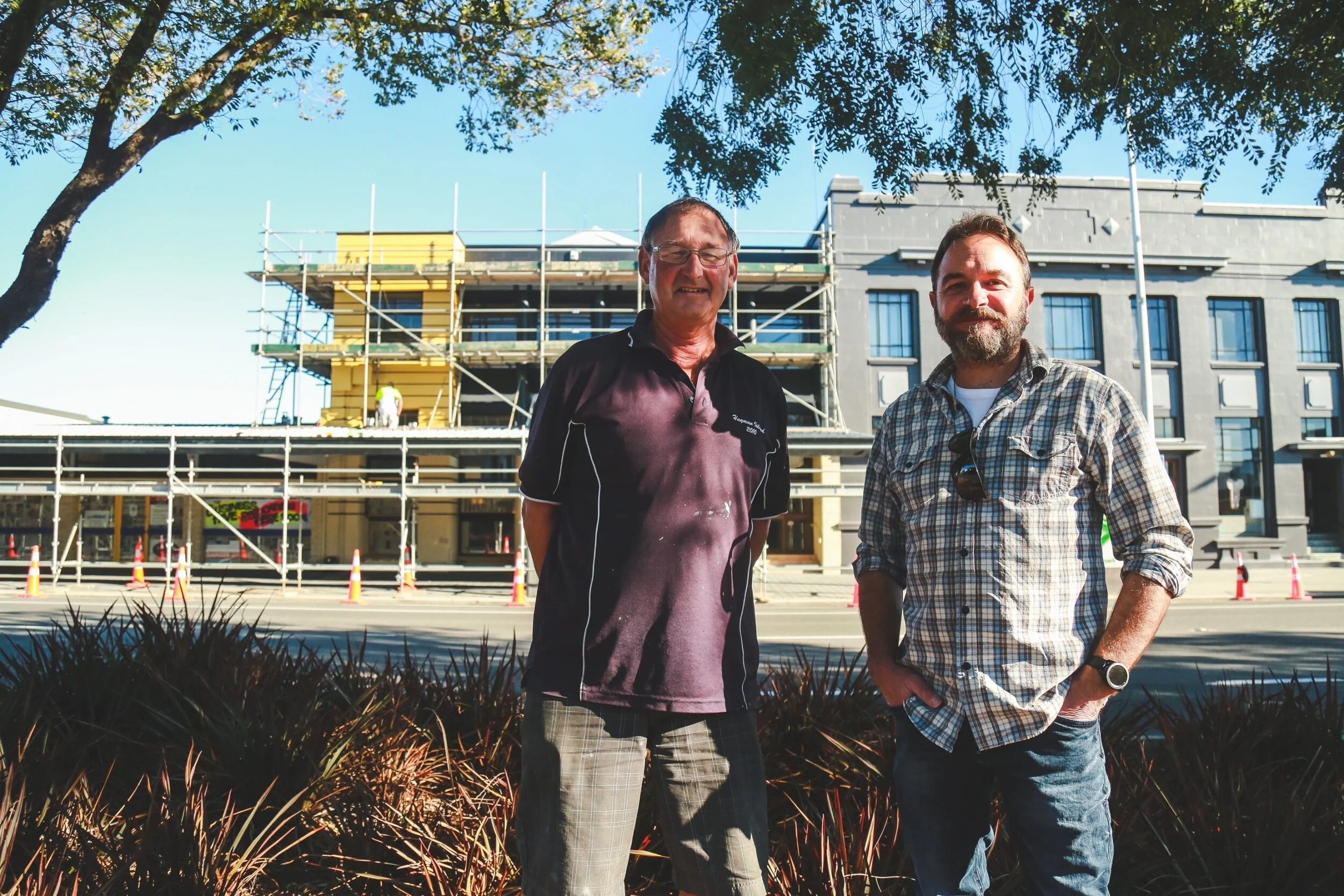
Just before The Business Hive opened in 2018, co-director Cara Tipping Smith made a speech saying “whatever we open with on day one will be different in three years’ time”.
Never has a truer word been spoken.
The co-working space in Oamaru’s Ribble St is on the move to Thames St – and it is tripling in size.
Ms Tipping-Smith and co-director Alex Regtien said it was important to “blend and fit in” with the needs of the people who were using The Business Hive and meet a growing demand.
The exterior of 120 Thames St has had a new lick of paint, and extensive work is under way to develop the two-storey interior. Everything was on track for a June opening, Mr Regtien said.
Conversations about a move started after last year’s lockdown, when social distancing at the Ribble St building was difficult, due to its shape and size, and they wanted to be more visible in Oamaru.
“We kind of went, we either go and costs too much money’ or we go work better’,” Ms Tipping Smith said.
The Thames St building – which previously housed Waitaki Financial Services and Real Classic Rock radio station – ”had a lot going for it”, Mr Regtien said.
Its size meant The Business Hive could offer more services and facilities, such as private office spaces and meeting rooms, and more hot desking, which had reached capacity for at Ribble St. It would also have a dedicated training room, and a treatment room for people in the health space.
As much as The Business Hive provided flexible, affordable office space for freelancers, the self-employed and start-up companies, it was about more than just the walls. The real beauty was bringing a variety of people together and letting their ideas collide, she said.
Despite the challenges presented by the Covid-19 pandemic, Mr Regtien and Ms Tipping Smith were optimistic about Oamaru’s future – and the future of co-working spaces.
Even as technology continued to improve, and more organisations had successfully introduced working from home after lockdown, The Business Hive had only continued to get busier.
“Because I actually think it’s the social stuff that makes people keep wanting to come. The convenience of it is all well and good, but just that one person walks to get a coffee and then people go actually me too’ and it’s broken your day up a little bit and you still get your work done,” she said.
“It’s just a great way of getting the best of both worlds.”
Oamaru architect Virginia Barlow had designed the new space, Design Federation was looking after the interiors and David Ovens was managing the project.
“It’s all local – it’s all local people,” Ms Tipping Smith said.
“You name it, I feel like we’re touching everybody.”
Mr Regtien and Ms Tipping Smith moved to Oamaru four years ago. Mr Regtien was working for Downer when Ms Tipping Smith pitched the idea of The Business Hive to him.
“I’d worked in co-working spaces in the UK, because I was a copywriter, and when I landed here, there just wasn’t any business support,” she said.
“There wasn’t anywhere to go. I didn’t know how to meet other freelancers. My work, my clients were in Auckland, if they were in New Zealand, and there were a few overseas.
“I got involved in community stuff, because I needed to find my own friends. Alex was making friends at work, but who wants to be the cling-on girlfriend?
“So that’s actually where it all started.”
It was exciting to see how the business had grown over the past three years, and they “can’t wait” to move into the new Thames St building.
Source: https://www.oamarumail.co.nz/community/relocated-business-hive-triple-the-size/

Make more ‘good old ordinary’ connections
So how do we find out? How do we know which of it is good?
We ask around.
That means turning up to some business events. It means joining some of those groups. Not just to sell our stuff (so 1990) but to chew the fat, make connections and be in the loop.

A year ago, we were in lockdown.
I can’t remember whether we had just ordered a box of River-T wine or had just finished drinking it? Whichever – thank you River-T!
Since then, I’ve lost count (and it’s not the wine’s fault . . . it could be the wine’s fault) of the number of business support initiatives I’ve seen.
There’s been a lot going on.
There’s been long-standing subsidised resources like Regional Business Partners Network and Mentors NZ.
There’s been new funding support like wage subsidies, Covid-19 relief funds and flexi-wage programmes (employee and self-employment).
There’s been inspired (and inspiring) new initiatives like Manaaki, Digital Boost and Small Business Day NZ and a multitude of Facebook groups sharing and promoting products and services with outstanding results. Yes, on digital, and if we’re not participating – we are losing out!
CPA Australia tells us that over 11 years of surveying, NZ small businesses have consistently lagged in the Asia-Pacific region for investment in innovation and participation in the digital economy.
Most recently, a quarter of all NZ businesses surveyed made no major changes as a result of the pandemic and only 9.3% reported an increase in focus on online sales!
That’s NZ as a whole.
Last year, Waitaki received about 2% of the Covid-19 Advisory Support funding for Otago. We have about 10% of Otago’s businesses.
That was a fully funded, targeted support programme for any business affected by Covid-19. Most of the funding went to Queenstown Lakes (57%) and Dunedin (26%).
Most of us didn’t apply or applied too late. Missed out.
Right now, support is out there for whatever challenges a business may face; mental, financial, interpersonal, logistics, health & safety, staffing, foreign exchange, sustainability, start-up funding, sales skills, supplier sourcing, marketing . . . It’s all on offer – paid for, subsidised and free!
So how do we find out? How do we know which of it is good?
We ask around.
That means turning up to some business events. It means joining some of those groups. Not just to sell our stuff (so 1990) but to chew the fat, make connections and be in the loop.
How did I find out about River-T doing wine deliveries during lockdown?
Yep, connections.
Not the elite kind. Just the good old ordinary, catch up and share kind. Then I bought it online.
It’s that simple and it’s time to join in.
Cara Tipping Smith is a director of The Business Hive and the chairwoman of the Oamaru Business Collective
Source: https://www.oamarumail.co.nz/opinion/make-more-good-old-ordinary-connections/

New Business Collective leader
The Oamaru Business Collective has a new leader.
Design Federation creative director Annabel Berry has stepped down from her role as chairwoman, and has been replaced by The Business Hive director Cara Tipping Smith.

The Oamaru Business Collective has a new leader.
Design Federation creative director Annabel Berry has stepped down from her role as chairwoman, and has been replaced by The Business Hive director Cara Tipping Smith.
Ms Tipping Smith knew she had big shoes to fill, taking over from Mrs Berry who founded the group in 2019, but said she was excited about the challenges ahead.
She had been involved with the Oamaru Business Collective from the start – “way back when it was just an idea Annabel had”.
“I think we all knew we needed a collective group to accurately represent local businesses, but it took Annabel to bring us together to make it happen,” she said.
She was “incredibly grateful” Mrs Berry would remain on the committee, continuing to help give local businesses a voice and increase their visibility in the community.
The committee had decided to rotate the chair role each year, to give board members the opportunity to drive a different focus.
“We decided that we would share the load,” Ms Tipping Smith said.
Last year, the Oamaru Business Collective became an incorporated society, with a paid annual subscription.
There was a variety of businesses signed up – from health practitioners to the trades. While their individual needs varied, there were commonalities, as the majority were small businesses, she said.
The collective holds regular social gatherings, hosted by different businesses.
“That’s been really interesting seeing people actually connect, not network,” Ms Tipping Smith said.
“Actually have a conversation with someone else in business, and it’s amazing just how powerful those connections are.”
The committee also met regularly, and would continue to organise events, such as Shoptober, and advocate on behalf of businesses.
Post-lockdown, the feeling among Oamaru businesses was mixed.
“I think it’s fair to say everybody’s got some kind of hardship,” Ms Tipping Smith said.
“There’s a lot of positivity, there’s a lot of ‘it’s not as bad as we thought it would be’, there’s some commentary around ‘we haven’t seen the worst of it yet’.”
A drop in spend in Otago and Southland was “still really hitting” – especially small businesses.
“That’s kids school fees, or the new van – it’s actually real money to them.”
At present, the council’s destination management and spatial plans were what the committee was most focused on.
While the destination management plan had a tourism focus, there was also potential to attract people to move to the Waitaki district, Ms Tipping Smith said.
“Of course, our tourists are limited – but actually, the people coming through could also wind up being newcomers. They could be the people who go, ‘this place is cool, we want to start a business here’, or ‘we want to employ people here’, or, actually, ‘we could run our business from here’.”
Ms Tipping Smith was passionate about making business ownership and management an attractive, “real” career choice.
“We are looking at what’s happening in other regions and going if we want to attract people?’.”
The Oamaru Business Collective committee is made up of Ms Tipping Smith, Mrs Berry, Cathy Maaka, Dawn Brown, Jeremy Holding, Rachael Keen, and Simon Berry.
Source: https://www.oamarumail.co.nz/community/new-business-collective-leader/

Question is: who’s the source of the story?
So next time someone leans in to give you a casual character assassination of someone else in this town – look at your source.
Ask yourself, what’s in it for them? Who looks good in this story? Who started the Oamarumour in the first place?

Let’s talk about talk.
When I was a child, my dad would often tell a story about how he got his first import licence.
Apparently, back in the day, you had to apply for one. He did. He was an up-and-coming young man with experience, contacts overseas and a good reputation.
He was declined.
He tried again.
He was declined.
He was a bit annoyed. For my dad, “a bit annoyed” meant bit, teeth and (usually) major traction.
The story went, he bought a licence off some government crony (his words, not mine) for a s***-tonne of money.
Since the licence had been issued to someone else, it wasn’t much use to him .. at least, on the surface of things.
Somehow, Dad managed to get an audience with someone in the high-ups (contacts, yeah?).
Once again, he asked for a licence and was declined. Then, (and this is the juicy bit) he pulled out his freshly purchased licence and put it in front of “Mr High-Up-Very-Important”.
“What’s that?”
“A licence.”
“That’s not legal.”
“True,” Dad said. “Shall we talk about how I managed to buy it?”
According to Dad, “Mr High-Up-Very-Important” went off and issued him a licence on the spot.
Dad would finish the story laughing, and say, “never stop asking questions”.
And so, I do – ask questions, that is.
All’s fair in love and business – right?
Or not.
The winner writes the story. Or more to the point, the speaker claims the win.
Crony – this muppet paid me a s***-tonne for a useless licence.
“Mr High-Up-Very-Important” – scandal averted for the cost of a licence this guy’ll have to make work.
Who’s right?
Whoever is telling the story.
Never let the truth get in the way of a bit of defamation, right? Damn the consequences (loss of job, government scandal, imprisonment, serious mental distress).
So next time someone leans in to give you a casual character assassination of someone else in this town – look at your source.
Ask yourself, what’s in it for them? Who looks good in this story? Who started the Oamarumour in the first place?
Fortunately, my story is now too old to do any damage. All the players are dead. I miss my dad. Dodgy import licence aside, he was a damn good human who loved to tell a good story.
Aren’t we all?
Just what stories are we telling?
Cara Tipping Smith is a director of The Business Hive
Source: https://www.oamarumail.co.nz/opinion/question-is-whos-the-source-of-the-story/

Ready for a new year
Looking forward, Xero tells us that small business trends for 2021 include: more remote working, more online sales, more workplace flexibility, more pivots and more small business tech. These are things The Business Hive can help support and we’ll keep working hard to help keep local businesses thriving.

And we’re back!
Just like that it’s 2021 and we’re back at work.
Blink. Right?!
But we’re excited.
Last year saw our local community rally together in a bunch of new ways and we’re better and stronger for it.
As it happens Xero agrees, stating “being part of a community has a very real commercial benefit that can’t even be broken by a pandemic”.
The local pivots and innovations that 2020 delivered or inspired are worth celebrating.
Things like Pen-y-bryn’s two Jameses’ own-price’ strategy last May. Brilliant and the frontrunner for elevating Oamaru in the minds of Kiwi travellers – thanks guys!
Things like Anvil Engineers’ foot-operated hand sanitising station that made us all that bit safer and made the national news. Go Hayes family!
Things like Jane Thompson and Helen Riley-Duddin’s inspired Meet the Maker fundraiser which showcased incredible local talent (some of whom sold a year’s worth of work in one day), instilled massive local pride and raised a wadge of cash for Fenwick School. Take a bow, guys – you’ve shown us the future!
As 2020 closed, we saw the launch of new local businesses – hospitality retail, manufacturing, trades, importing, health and wellbeing, professional services and more – all businesses being built by people boldly investing in their futures and our collective economy.
Congratulations and thank you, every one!
We also saw profound bravery in those who closed their businesses. You worked every bit as hard as the rest of us. Thank you for your service and your effort.
You got beaten in the ring that was 2020 but you’re not out for the count. Stand tall. There will be new bouts and you will win again.
Looking forward, Xero tells us that small business trends for 2021 include: more remote working, more online sales, more workplace flexibility, more pivots and more small business tech. These are things The Business Hive can help support and we’ll keep working hard to help keep local businesses thriving.
Expect some new offerings. Stay in touch and watch this space.
On a personal note, I was humbled by being named a Waitakian of the Year for 2020.
I have a lot of support that enables me to get involved in things that matter to me and am grateful beyond words especially for the guy who makes it possible – Alex Regtien.
Welcome to 2021! Let’s get cracking.
Cara Tipping Smith is a director of The Business Hive, a co-working space in Oamaru’s Ribble St.
Source: http://www.oamarumail.co.nz/opinion/ready-for-a-new-year/

Collective for local businesses
We think it’s important for local businesses to have local representation that doesn’t have to juggle the interests of any other district.
The Oamaru Business Collective is more than a retailers’ group. It offers collective support for all local businesses; professional services, trades, manufacturers, hospitality and more.

Back in the day, when people asked me what I was studying and I said, “psychology”, their response was usually to fold their arms, take a step backwards and say something like “are you analysing me?”.
Let’s just say psychology didn’t make me the most popular girl in the pub.
That all changed when I decided to lie and tell people I was studying palmistry. Cue a line-up of people with their hands out, palm up, asking me what I “could see”.
I learned that the way information is presented makes a difference.
Psychology is a science and like all sciences, it depends on numbers.
I quite like numbers. They either add up or they don’t.
So, a couple of weeks ago, when the Otago Chamber of Commerce put out some numbers about how it had distributed central government money to help support businesses in our region, I was interested.
Scrolling down the list of districts I read: Dunedin City, Clutha, Central Otago, Queenstown, Waitaki and then, last on the list, Wanaka. Wanaka’s not a district. Wanaka and Queenstown are part of the Queenstown-Lakes district.
At least they are in every single other government or regional authority report I could find.
Interest piqued, I went down the rabbit hole. Turns out, it was one of those dusty, shallow, lazy sort of rabbit holes that don’t run very deep.
With some quick maths, I recognised that, of all the funding distributed, Queenstown-Lakes received on average, about 61%.
Within that, it received 78% of the tourism transition and 58% of the Covid-19 advisory support money allocated to the Otago region.
By contrast, Waitaki received an average of 2% to 3%.
Personally, I can’t begrudge the support delivered to Queenstown-Lakes. It has by far been hardest hit.
Why create a separate Wanaka district? You can make up your own mind about that.
For us, the focus is local.
That’s why we’ve signed up to the newly incorporated Oamaru Business Collective.
We think it’s important for local businesses to have local representation that doesn’t have to juggle the interests of any other district.
The Oamaru Business Collective is more than a retailers’ group. It offers collective support for all local businesses; professional services, trades, manufacturers, hospitality and more.
Membership starts from $10 per month and the first event – a social media workshop – is free for those signed up.
Join the Facebook group for details.
Cara Tipping Smith is a director of The Business Hive, and an Oamaru Business Collective committee member.
Source: https://www.oamarumail.co.nz/opinion/collective-for-local-businesses/

Time to unite behind a shared purpose
In two months, we’ll be at the polls.
What should we as a nation allow and disallow?
Who should be looked after? Who needs to pull more of their weight?

As I write this, the news is breaking . . . Todd Muller, leader of the National Party, has resigned.
I love politics.
I like to get deep into policy detail. Not so much the scandals.
Petty politicking doesn’t do anything for me, not in government and not in life.
In two months, we’ll be at the polls.
What should we as a nation allow and disallow?
Who should be looked after? Who needs to pull more of their weight?
Decades ago, I studied political theory.
I had a brilliant lecturer and I’d sit in awe as he crafted deeply theoretical constructs on such lofty notions as human rights or freedom.
I worshipped his ability to wend words through the vapours of a stale auditorium revealing glistening utopias and their shadowy counterparts week after week.
He argued everything both ways and sideways.
It was grounded for me with one simple theoretical dichotomy: “freedom to do what you want” versus “freedom from interference”.
Two things you almost never have in the same moment in time.
Follow me here . . .
If you have “freedom to do what you want” then I am not “free from interference” (yours) and vice versa.
The only way we both get “freedom to do what we want” and “freedom from interference” is if we want the same thing.
So, if you want me to do something (or not do something) and I don’t agree, then you have to convince me or coerce me, right?
That’s exactly where we are today as I write.
Not just in the conversations the National Party will have had on Tuesday morning, but in every part of our lives and economy.
It’s there in our Covid response. It’s there in our recovery.
From the corridors of power to the dirty alleyways of Facebook these are our options -convince or coerce.
In our local business community I see so many examples of the former: businesses aligning to support collaborations, celebrating success and sharing ideas to help take our town forward.
In our wider community I see examples of the later: threats to name and shame shopkeepers, personal attacks and outright slander.
We don’t choose our freedoms just once every three years.
We cast them in every action and reaction.
We can get behind the things we want in common or let petty politicking bullies tear every idea apart.
I’m voting for the former.
Feel free to join the movement.
Cara Tipping Smith is a director of The Business Hive in Oamaru.
Source: https://www.oamarumail.co.nz/opinion/time-to-unite-behind-a-shared-purpose/

Social media full of crazy but plausible lies
The internet equivalent of staying home is not sharing.
The internet equivalent of washing our hands is fact-checking. Twenty seconds and the contamination’s gone.

Seventy years ago (give or take), my mum and her sister walked into the kitchen for breakfast to find the radio blasting and their dad sitting on the floor with a paper bag over his head.
Turned out, he was listening to the radio about how to save yourself from nuclear fallout.
Granddad had been carefully following the instructions as the radio announcer delivered them, diligently practising what he needed to know to keep his family safe.
At this point in the story, Mum and my auntie would double over laughing, hugging their sides and cry-gasping through their giggles.
That day was was April 1. Granddad (like hundreds of others) had fallen for the “fool”.
Granddad wasn’t happy.
No real harm had been done.
Fast-forward to 2020 and our Covid-19 crisis – human nature hasn’t changed.
True, we want to keep ourselves and our families safe.
Also true, misinformation can make a fool of any one of us.
Nowadays we know you can’t protect yourself from nuclear fallout by putting a paper bag over your head. In the early 1950s, it wasn’t so clear.
Of-the-era advice included shutting windows, crawling under tables and – wait for it – hiding behind hay bales for protection.
Whatever made people feel better in the face of certain death, right?
This time it’s different.
We’ve got meaningful and useful Covid-19 advice.
We’ve got some control over the spread of the virus.
In fact, for most of us, the virus doesn’t even threaten certain death.
Yet, ’50s-era-style un-science and mind-curdling but believable lies are dripping from social media like nuclear fallout itself.
When my grandfather fell for bunkum, he only risked egg on his face (well, that and the paper bag, of course).
Today, the spread of lies can cause death and it comes in two distinct forms.
The first kind includes quack cures and medicinal lies – the things that harm people directly or indirectly but are wrapped up like a real cure.
Stuff like, “breathe in the air from a hairdryer because heat kills the virus”.
Great. Let’s have kids with mouth burns, adults with itchy seared nasal passages and then expect them to keep their hands away from their face!
Stuff like, “drink hydrogen peroxide”, “methanol” or some other poison to kill the virus.
Awesome. Hospitals, overrun by Covid-19 patients, became inundated with poison cases in Iran, thanks to fake methanol cures being shared on social media (including blinded for life) and up to 300 dead.
Sharing medicinal lies causes real harm. That’s obvious, right?
Even when President Trump says it?
How about this .. Trump said hydroxychloroquine and chloroquine (antimalarial treatments) cure Covid-19. The US Food and Drug Administration said they didn’t. Meantime supplies evaporated for (among others) Lupus patients who need those drugs to help prevent organ damage.
Don’t get me started on injecting disinfectant. I have no words.
Yet, there’s worse.
Worse is when people think they’re virus-free or virus-safe when they are not.
This is the really dangerous stuff. In the movies, this is the contagion of the unsuspecting and the unforgiven. This is the annihilation of the good by the well-intentioned. This kind of misinformation is what haunts the annals of the walking dead.
Walking-dead advice puts people on to the streets, thinking “I’m OK, mate” while they silently spread the disease.
Walking-dead advice is stuff like you can make hand sanitiser from vodka.
Come on! Common sense says if you can drink it, it’s not likely to kill a virus. But in times of desperation, we like a bit of magical thinking (like putting a paper bag on our head), especially if it’s delivered by a trusted radio announcer (friend’s social media recipe).
Look, if it did work, I’m pretty sure the hospitals and the government would have commandeered supplies and put Joe’s “aloe vera vodka sanitiser” to work – with or without essential oils.
Walking-dead advice is stuff like taking 10 deep breaths in the morning will tell you if you have it.
Stop the bus. Who needs actual tests? Why bother actually testing?
We can just breath-test ourselves in the morning with some Les Mills calisthenics and go about our daily business as usual right?
Right.
Up until we can’t breathe.
Or Granddad can’t breathe.
Or that nice lady who played bridge with Granddad in the rest-home can’t breathe.
There’s no question that at times like this we’ll grasp at any straw of hope in the darkness.
My grandad, sitting on that floor with a paper bag on his head was duped by a trusted radio announcer on an April Fools’ Day morning.
He was a smart man, an engineer and a guy who would have done anything to protect his family.
We can all be taken in.
We know that staying at home saves lives. We know that washing our hands eliminates the chance of accidental contamination.
The internet equivalent of staying home is not sharing.
The internet equivalent of washing our hands is fact-checking. Twenty seconds and the contamination’s gone.
Now’s the time to take the paper bags off our heads and start facing up to responsible internetting.
Cute kitten videos notwithstanding.
Cara Tipping Smith is the director of The Business Hive
Source: https://www.oamarumail.co.nz/opinion/social-media-full-of-crazy-but-plausible-lies/

$35,000 from Lotteries big boost for WaiYou!
I’m truly excited to share the awesome news we have just landed $35,000 from the National Lottery Community Fund for our businesses and young people.

I’m truly excited to share the awesome news we have just landed $35,000 from the National Lottery Community Fund for our businesses and young people.
By we, I mean everyone in the Waitaki and Waimate regions. Yep, everyone. Mums and dads. Young people. Old people. Businesspeople, big and small. Doers and dreamers alike.
You may have forgotten about that WaiYou! project I banged on about a few columns ago. Let me remind you. WaiYou! is a local initiative (Waitaki and Waimate) about making it easy for young people and businesspeople to connect for work-related opportunities including by using a world-class tool (developed in Dunedin) called Youth Employment Success (Y.E.S.).
Why? Because businesspeople want good workers, suppliers and customers.
Young people want real prospects – jobs and careers that aren’t just on a race to the bottom in terms of wages (or satisfaction).
The work world is fast-changing, as is the world of education – vocational and academic.
Economic uncertainty says a heap of educational debt may only serve to send our young people (and our dollars to support them) to bigger towns and bigger economies – leaving our mums and dads struggling in the dust.
We have an ageing population and quite frankly, someone’s got to pay the rates. That means we need working-aged people earning enough to live here.
Different generations have different styles and expectations.
But getting together, learning each other’s priorities and finding that common ground is what gets the business done.
Business owners know that. For us, it’s everyday life.
Over the next months, businesses will have unprecedented opportunity to engage with young people. (Not only with WaiYou! but also the school’s career expo in May).
For businesses, it’s in our interest to check them out and actively look for the mutual benefits they can bring.
We haven’t finished fundraising but, thanks to the Rotary Club of Oamaru and Lotteries, we’re off to a flying start. Let’s make the most of it. We’re all in it together.
WaiYou! is a Rotary Club of Oamaru project. The steering group includes business, school, ot-for-profit and local government representatives from Waitaki, Waimate and Dunedin. Find out more at facebook.com/YESWaiYou.
Cara Tipping Smith is a director of The Business Hive.
Source: https://www.oamarumail.co.nz/opinion/35000-from-lotteries-big-boost-for-waiyou/

Productivity gains made easy
Productivity.
It’s on every small business owner’s mind this time of year.
If we’re not ruminating on how our business could be more productive, we’re asking “how could I be more productive or get better life balance, work smarter not harder”, yadda yadda yadda.

Productivity.
It’s on every small business owner’s mind this time of year.
If we’re not ruminating on how our business could be more productive, we’re asking “how could I be more productive or get better life balance, work smarter not harder”, yadda yadda yadda.
Right now, productivity is all over the news.
Sanna Marin, Finland’s new (and young) prime minister, once suggested working six-hour days or four-day weeks. Admittedly that was some time ago when she was transport minister but hey, it’s making headlines again now.
Perpetual Guardian’s Andrew Barnes and Charlotte Lockhart are on a tour of the United States talking about their successful implementation of a four-day working week (whoop, another Kiwi company punches above its weight – love it!).
Of course, Barnes has a book coming and, in the interim, an interesting read in a free white paper download at 4dayweek.com.
Perpetual Guardian excepted, we’re not very productive in New Zealand.
We know this because our Productivity Commission says so. Yep, they are a real entity with a very informative (although ironically slow loading) website.
They reckon New Zealand’s firms are on average about 30% to 40% less productive than our international counterparts (2016-17 figures).
This week, our Government commissioned them to come up with policies to improve our collective business performance by analysing and extrapolating what works from our most effective firms
These defined, but I’m hoping there’ll be some from the 97% of all Kiwi businesses which employ fewer than 20 employees, including from the 360,000 business owners who work alone.
Perpetual Guardian has 240 employees.
Notwithstanding the difference in scale, some of their white paper suggestions can be easily applied for a small business owner.
Things like focusing on outcomes instead of time spent. Things like being clear about our goals and the payoff of doing things differently. Things like figuring out what we could do with that extra time and making that our reward.
Alex and I are going to test a few theories over the next little while. I think I’ll start with shorter meetings.
I figure if I have 10 meetings a week and they’re 45 minutes instead of an hour, I’ll get two and a-half hours back.
That gets me round a nine-hole course. Or could, if I did it more. Every week.
Food for thought.
Hope you’re having a happy and productive New Year.
☆ Cara Tipping Smith is the director of The Business Hive.
Source: https://www.oamarumail.co.nz/opinion/productivity-gains-made-easy/

New initiative aimed at youth employment
Let’s stop the intergenerational catastrophising and write a new story.
Introducing (drum roll please) a new local initiative; WaiYou!

The revolution is coming.
The kids are taking over the world and so are the machines.
The sky is falling and the baby boomers have sucked the life out of everyone’s future.
Or to quote a boomer mate of mine: “calm the farm”.
Young people revolt (sometimes in both senses of the word). True.
Increased automation is happening. Fact.
Conversely, baby boomers (and gen Xers) are deeply invested in their children’s and grandchildren’s futures.
You only have to ask one.
And that’s the key.
One on one, we all get along. It’s that “them” and “us” type thinking that chucks a spanner in the works.
So, let’s not do that. Let’s stop the intergenerational catastrophising and write a new story.
Introducing (drum roll please) a new local initiative; WaiYou!
WaiYou! has come out of the Work Ready Passport initiative with representatives from both Waitaki and Waimate District Councils, schools, businesses, business groups and community on both sides of the river.
As a group, we are operating under the Rotary Club of Oamaru’s charitable trust.
Our purpose is to write a better story about our youth and work.
Specifically, we want to change that old-people dialogue that says, “kids aren’t work ready”, because we can help them be ready (and if we’re honest, we were pretty useless at the beginning too).
Specifically, we want to change out the young-people dialogue that says “no-one will give me a chance” – because we can give them a chance (and we’ve been there – we could have wallpapered our bedrooms with rejection letters, back in the day).
WaiYou! is going to sponsor a local version of a programme called Youth Employment Success (YES).
YES is a gold-standard, multi award-winning programme that creates one-on-one youth-employer connections that changes lives.
We’re determined to bring it here – as fast as we can.
We’ll be fundraising.
We’ll need employers willing to mentor youth on board.
We’ll need parents and grandparents to show support.
Most of all, we’ll be showing youth we have some cool tools to help them, and they have greater options than they ever had before.
Commenting on the differences between baby boomers and younger generations this week, economist Brad Olsen said: “We need to rapidly shift our energy from blame to action”.
We welcome your interest. Now’s a great time to get in touch.
★ Cara Tipping Smith is the director of The Business Hive.
Source: https://www.oamarumail.co.nz/opinion/new-initiative-aimed-at-youth-employment/

Busy? Take a minute to think
June has rocked around as it always does and “busy” is the new “weather” of chats.
How are you? So busy. Can’t believe it’s June already .

June has rocked around as it always does and “busy” is the new “weather” of chats.
How are you? So busy. Can’t believe it’s June already .
In the crush of the busy-blues myself, I went procrastination Googling to see if business owners are busier than anyone else.
Turns out we’re not. But I did find a thing called entrepreneur insomnia.
It’s exactly like insomnia, but made special by putting the word “entrepreneur” in front.
I did find some smug little sayings, “busy is as busy does”, “if you want something done – give it to a busy person”.
“Busy is as busy does”. Thanks, Google, we know we make our own busy.
But whether everyone’s busy is equal or some people’s busy is more equal than others has to be a matter of perspective (obviously not your own though – just ask any project or volunteer co-ordinator).
I’m convinced the “give it to a busy person” saying is only said by reprobates or masochists. Real busy people forget stuff and sometimes forget what they were supposed to do.
Super-efficient, busier-than-other-busy-people – maybe you’re the exceptions.
For the rest of us, the fear of forgetting is real and, come to think of it, most likely responsible for that “entrepreneurial” (or any other kind of) insomnia.
I did find time management advice including strangely animal-focused gems such as “beware the elephants on the horizon” and “how to eat two frogs”.
Those elephants? Apparently, they sneak up on you, like your mother’s 80th birthday that you had all year to organise .. a year ago.
The frogs? Eat the biggest, ugliest first. That way the second will be less awful.
Yes. That’s real advice.
While procrastination Googling might be fun (be honest busy people, you do it, too), I was looking for something simpler and more concrete.
The dictionary says “busy” means one of two things: having a great deal to do, or excessively detailed or decorated.
Hmmm, that sounds a lot like my kind of busy.
So, the wisdom I’m taking is this. “Do less, do less fussing”.
As business owners we’re in charge. Things will crop up, surprises will happen but we choose what we add to our plates (frogs and elephants included).
I wouldn’t give up my day job for a second.
That doesn’t mean I can’t tweak it. Likely so can you.
Why not do that?
Enjoy June.
★ Cara Tipping Smith is the director of The Business Hive.
Source: https://www.oamarumail.co.nz/opinion/busy-take-a-minute-to-think/

The benefits of collaborating
Since then, in every role, collaboration has produced far better results than I could on my own.
Equally, I came to rely on trusted competitors. These were the people I could direct clients to whenever I didn’t have capacity, the right solution or simply didn’t want to take on that job.

Business is supposed to be competitive, right? You must be better than the competition and win the most sales.
Back when I worked in recruitment, we had sales days that were like sugar-hyped children’s parties.
Imagine, the whole team competitive cold calling; make a cold call (yeah), book an appointment (whoop), pop a balloon (yeeha), win a prize (voucher for Asti Spumante – score) and repeat.
It was chaotic hell and I hated it.
Nothing says “I’m a professional” during a cold call like some woman screaming in the background. Not.
But that was how the business was done.
Doesn’t make it right.
A few decades on, I’ve learned a lot. Like the benefits of collaboration and trusted competitors.
Funnily enough, the seed was planted in those recruiting days when the company I worked for and a major competitor merged.
Management was worried about the two top billers – strong minded, capable women who’d been direct competitors with overlapping client portfolios which were now to be divvied up between them.
Meetings were held.
Concerns were discussed.
Ah, I can still remember their pinched faces.
She and I went for a drink. We shared insights about our (formerly) shared clients. We laughed our heads off about the drama everyone was expecting.
In short, we naturally fell into line with each other because we had something our bosses hadn’t factored in – mutual respect.
Our collaboration made us both better off (and our bosses happy).
It was a lesson for life.
Since then, in every role, collaboration has produced far better results than I could on my own.
Equally, I came to rely on trusted competitors. These were the people I could direct clients to whenever I didn’t have capacity, the right solution or simply didn’t want to take on that job.
They allowed me to work in my sweet spot, develop my niche and build far more profitable and loyal client bases.
That’s why when there was a call for Oamaru retailers to work together, we offered to host a meeting at The Business Hive.
Back in recruiting days, it took just a little initiative and a very short time for my colleague and I to figure things out.
If we’d waited for someone else to take the lead, we might have had a different outcome.
So, when it comes to competition or collaboration, I say both. And retailers, whatever it takes – we’ll support you.
★ Cara Tipping Smith is the director of The Business Hive.
Source: https://www.oamarumail.co.nz/community/the-benefits-of-collaborating/